Which Option Lasts The Longest for Wine Cellar Insulation?
Introduces the central question.
Importance of Insulating a Wine Cellar
Wine is sensitive to temperature and humidity swings; poor insulation damages quality and shelf life, especially in California's variable temperatures.
Criteria for Choosing Wine Cellar Insulation
Factors: temperature, humidity, energy efficiency, durability.
Temperature Control
Wine matures properly between 55°F and 58°F; insulation holds that range. Check R-value; higher is better.
- 55-58°F
Humidity Control
Ideal humidity 50% to 70%. Closed-cell spray foam acts as both insulator and vapor barrier, well suited to humidity control.
- 50-70% humidity
Energy Efficiency
Good insulation reduces constant cooling, lowering bills; savings eventually offset higher upfront price. Polyurethane spray foam forms an airtight seal limiting heat transfer.
Longevity and Durability
Recommends durable materials like closed-cell spray foam; cheaper options may need more frequent replacement or deliver less efficiency.
Fiberglass Batt Insulation
Section on fiberglass batts.
What It Is
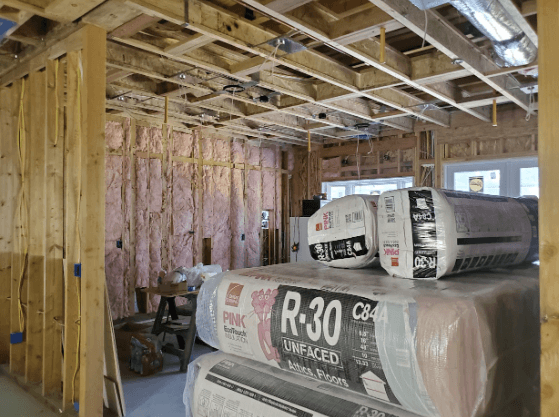
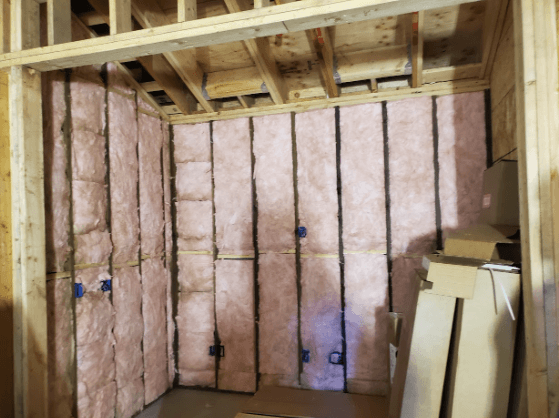
Flexible sheets of fine glass fibers installed between wall studs, floor joists and ceiling rafters.
Installation Method
Cut to fit snugly without compression (compression reduces effectiveness); apply a plastic vapor barrier to prevent moisture buildup.
Pros and Cons
Pros: low cost, wide availability, fairly easy installation. Cons: weaker moisture control, settling over time reduces performance.
- Pros: low cost, availability, easy install
- Cons: weaker moisture control, settles
Licensed, bonded & insured — free on-site inspections within 100 miles of San Francisco. Save $250 on orders over $2,500.
Longevity
Fiberglass batts last 10 to 25 years, but effectiveness declines from settling and moisture; initially cost-effective but less durable.
- Fiberglass batts: 10-25 years
Polyurethane Closed-Cell Spray Foam Insulation
Section on closed-cell spray foam.
What It Is
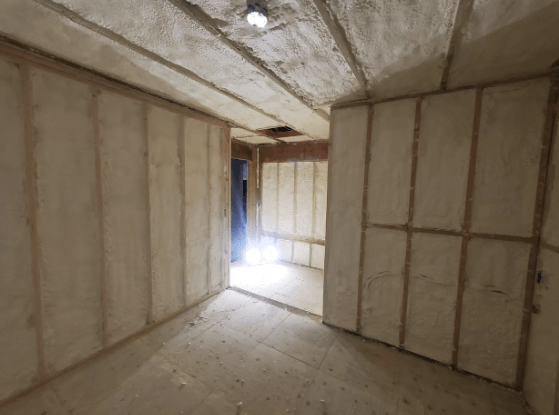
Two-component mixture expanding into rigid foam with strong insulation and air sealing. Closed-cell preferred for wine cellars for higher density and better insulating performance.
Installation Method
Requires specialized equipment; professional recommended. Steps: protect surfaces, mix components, spray walls/ceiling/floor, apply in layers that each cure, trim excess, ventilate to avoid fumes.
- Protect surfaces
- Mix components
- Spray walls, ceiling, floor
- Apply in curing layers
- Trim excess
- Ventilate
Pros and Cons
Pros: high R-value per inch, combined insulator and vapor barrier, airtight seal, resistance to moisture and pests. Cons: higher initial cost, professional installation adds to price.
- Pros: high R-value, vapor barrier, airtight, moisture/pest resistant
- Cons: higher cost, professional install
Comparative Analysis
Compares by R-value and recommends options.
Insulation Value Comparison
R-value per inch table.
| Type of Insulation | R-Value per Inch |
|---|---|
| Fiberglass Batt | R-2.9 to R-3.8 |
| Closed-Cell Spray Foam | R-6 to R-7 |
Choosing the Best Long-Lasting Insulation for Your Wine Cellar
Closed-cell spray foam is best for performance, durability and efficiency (high R-value, moisture resistance reducing mold, airtight seal protecting structure). Fiberglass batts are cheapest but less effective against moisture and prone to settling and replacement. (H4 subheads: Closed-Cell Spray Foam Insulation; Fiberglass Batt Insulation.)
Professional Installation
Recommended for best performance and longevity, especially closed-cell spray foam which needs specialized equipment.
Long-Term Benefits
Temperature stability for aging, humidity control keeping corks from drying, lower energy costs and cooling workload, long-lasting protection.
- Temperature stability
- Humidity control
- Lower energy costs
- Long-lasting protection
Get an Instant Quote From a Licensed California Insulation Contractor
USA Spray Me (CSLB Lic# 1058008) installs spray foam, blow-in, fiberglass and soundproofing insulation, foam roofing and protective coatings throughout the San Francisco Bay Area and within 100 miles of the city, including San Francisco. Call (855) 566-5340 or request a free inspection below — save $250 on orders over $2,500.