- Closed-cell: R-6 to R-7 per inch, strong moisture resistance, structural rigidity; best for roofs, exterior walls, metal buildings, high-humidity areas
- Open-cell: R-3.5 to R-3.8 per inch, good soundproofing and air sealing, lower cost; best for interior walls and attics in mild climates
- 2025 costs: open-cell $0.60–$1.60 per board foot ($1.50–$3.50/sq ft installed); closed-cell $1.30–$3.10 per board foot ($3.00–$5.00/sq ft installed)
- Energy savings 25–40% on heating/cooling, 3–5 year ROI from reduced HVAC loads
- 2025 shift to HFO systems cuts greenhouse gas emissions up to 99% vs older HFC foams
- Closed-cell suits coastal/humid California; open-cell suits inland/mild climates
- USA Spray Me designs and installs code-compliant systems suited to each climate and building type
- What Is Spray Foam & Why It Matters in 2025
- Tighter energy codes
- Greener chemistry
- Moisture and durability
- Open-Cell Spray Foam – Properties & Best Uses
- Closed-Cell Spray Foam – Properties & Best Uses
- Closed-Cell vs Open-Cell — R-Values & Thickness
- When to Use Closed-Cell vs Open-Cell
- California-Specific Climate Recommendations
- 2025 Building Codes & Sustainability Trends
- Common Mistakes to Avoid
What Is Spray Foam & Why It Matters in 2025
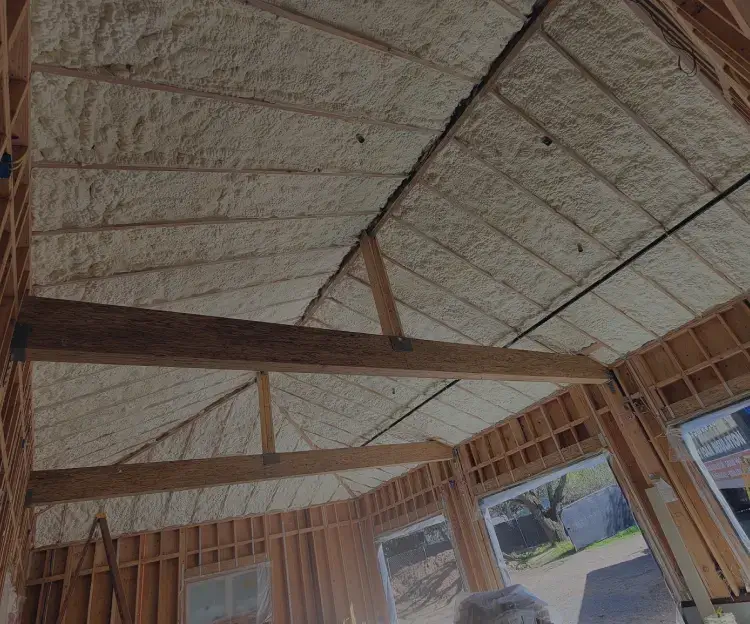
SPF is applied as a liquid that expands up to 100 times its original size, forming an airtight seamless envelope. Insulates and seals in one step, stopping drafts, condensation and heat loss.
Why Spray Foam Is Critical in 2025
Three drivers: tighter energy codes, greener chemistry, moisture/durability.
Tighter energy codes
IECC 2024 and California Title 24 (2025 revision) require higher R-values and stricter air-leakage limits. Closed-cell exceeds these benchmarks and can reduce energy loss by up to 40% vs traditional materials. Compliant buildings pass inspection more easily and may qualify for rebates and tax incentives.
Greener chemistry
HFC-based systems being phased out nationwide starting January 1, 2025. Modern closed-cell uses low-GWP HFO blowing agents, cutting carbon footprint 90–99% without losing R-value or durability.
Moisture and durability
Properly installed spray foam lasts over 80 years and resists mold, air leaks and water. Unlike fiberglass or cellulose, it does not settle, compress or absorb moisture.
Open-Cell Spray Foam – Properties & Best Uses
Lighter and more flexible; cells stay open after expansion giving a spongy texture suited to sound absorption and air sealing.
Technical Specifications (Open-Cell)
Density about 0.5 lb/ft³. R-3.5 to R-3.8 per inch. Expands up to 100:1, fills irregular cavities. Semi-permeable to vapor (not a vapor barrier). Superior acoustic absorption.
- ~0.5 lb/ft³
- R-3.5–R-3.8/in
- 100:1 expansion
- Semi-permeable to vapor
Where Open-Cell Excels
Interior partitions (bedrooms, offices, multi-family units) for sound control; conditioned attics in mild climates with adequate depth; budget air sealing where cavity depth allows; popular for interior walls in new construction.
Important Limitations (Open-Cell)
Not suitable for crawl spaces, basements or metal buildings. Vapor can pass through, risking condensation. Needs nearly twice the thickness of closed-cell for the same R-value. Adds no structural strength.
Closed-Cell Spray Foam – Properties & Best Uses
Heavy-duty option; tightly packed fully closed cells create a rigid dense material that does more than insulate.
Technical Specifications (Closed-Cell)
Density about 2.0 lb/ft³ (four times open-cell). R-6 to R-7 per inch (nearly double open-cell). Adds measurable structural strength to walls and roofs. Very low vapor permeability, effective vapor retarder. Excellent moisture resistance.
- ~2.0 lb/ft³
- R-6–R-7/in
- Vapor retarder
- Structural strength
Where Closed-Cell Excels
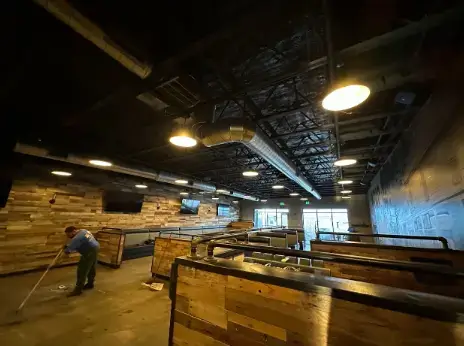
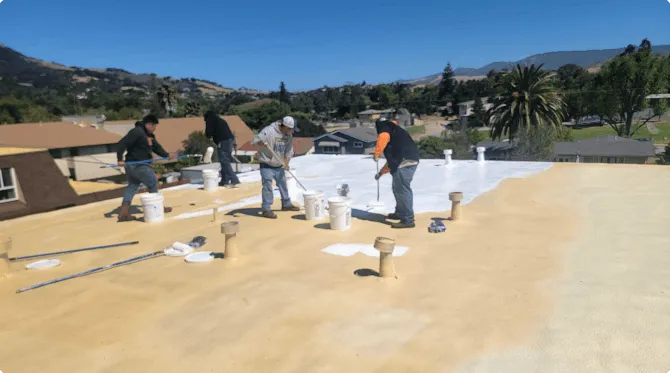
Metal buildings, warehouses, pole barns (prevents condensation/corrosion); agricultural and food storage (stabilizes temp and humidity); roofs and decks (waterproof continuous thermal barrier); exterior walls and rim joists (max R in limited space); humid/coastal areas (San Francisco, Monterey, San Diego) resisting mold and vapor drive from salt air and fog; retrofits without losing interior space.
- Metal buildings, warehouses, pole barns
- Agricultural and food storage
- Roofs and decks
- Exterior walls and rim joists
- Humid or coastal areas: San Francisco, Monterey, San Diego
- Retrofits
Important Considerations (Closed-Cell)
Costs 2–3 times open-cell upfront. Requires licensed professional installation, not DIY. Codes require an ignition or thermal barrier such as drywall.
Closed-Cell vs Open-Cell — R-Values & Thickness
Comparison table.
| Property | Open-Cell | Closed-Cell |
|---|---|---|
| R-value per inch | R-3.5–R-3.8 | R-6–R-7 |
| Density | ~0.5 lb/ft³ | ~2.0 lb/ft³ |
| Air sealing | Excellent | Excellent |
| Vapor/moisture control | Semi-permeable | Low permeability |
| Sound control | Superior | Moderate |
| Structural strength | None | Adds rigidity |
| Typical uses | Interior walls, attics | Roofs, exterior, metal buildings |
Real-World Example
To reach R-38 (typical California attic target): open-cell needs 10–11 inches, closed-cell 5.5–6.5 inches. Closed-cell fits where open-cell won't.
When to Use Closed-Cell vs Open-Cell
Decision lists.
Choose Closed-Cell If:
Max R-value in fixed cavity depth; roofs, rim joists, exterior walls where moisture matters; humidity, flooding or coastal exposure; metal or agricultural buildings needing condensation control; structure needs extra rigidity/racking strength; coastal California (San Francisco, Monterey, San Diego), humid zone or extreme temperature swings.
Licensed, bonded & insured — free on-site inspections within 100 miles of San Francisco. Save $250 on orders over $2,500.
Choose Open-Cell If:
Soundproofing between rooms or floors; mild dry climate; cost-effective air sealing on a budget; ample attic or new-construction cavity depth; minimal moisture exposure; interior partitions in conditioned spaces.
California-Specific Climate Recommendations
Regional table.
| Region | Climate challenge | Recommended foam |
|---|---|---|
| Coastal (San Francisco, Monterey, San Diego) | High humidity, salt air, fog | Closed-cell for roof and exterior walls |
| Central Valley (Sacramento, Fresno) | Extreme heat, temperature swings | Closed-cell for roof and walls |
| Mountain & High Desert (Tahoe, Big Bear) | Cold winters, limited cavity space | Closed-cell for high R per inch |
| Inland Mild (Modesto, Livermore) | Balanced, moderate conditions | Hybrid: closed-cell exterior, open-cell interior |
Why Location Matters
Coastal fog and salt air corrode buildings; closed-cell protects. Central Valley summers reach 110°F with freezing winters, calling for closed-cell's higher R. Mountain/high-desert need max insulation in minimal space. Inland mild climates suit hybrid systems (closed-cell exterior envelope, open-cell interior partitions).
2025 Building Codes & Sustainability Trends
Code and environmental trends.
Building Code Evolution
IECC 2024 and Title 24 (2025 update) require higher R-values and tighter air sealing for attics, walls and foundations. Spray foam covers insulation and air sealing in one application; projects often exceed code minimums by 20–30%. Spray-foam homes typically earn better HERS scores and higher resale value. Incentives exist at federal, state and utility levels.
Environmental Impact and Progress
EPA's 2025 HFC phase-down eliminated most high-GWP formulations. Modern closed-cell uses HFO blowing agents with up to 99% lower GWP, cutting lifetime carbon per home by the equivalent of permanently removing two passenger cars. USA Spray Me uses only low-GWP, Title 24-compliant systems tested for low VOCs.
Common Mistakes to Avoid
Six mistakes and a solution.
DIY or Unlicensed Application
Foam needs exact chemical ratios, temperature control and professional equipment; poor mixing yields soft or brittle foam that fails inspection and wastes thousands of dollars.
Using Open-Cell Where Moisture Exists
Open-cell in crawl spaces, basements or metal buildings invites mold, rot and structural damage.
Under-Applying Closed-Cell
Skimping on thickness lowers R-value, weakens the vapor barrier and forfeits structural benefits.
Ignoring Ventilation and Ignition Barriers
Codes require an approved ignition barrier (typically drywall) and in some applications ventilation; cutting corners creates violations and safety risks.
Choosing the Cheapest Quote
Unqualified contractors may use outdated HFC foams, apply too little thickness or lack insurance; cheapest bid becomes costliest over time.
The Solution
Hire certified, insured professionals. USA Spray Me meets or exceeds California code and inspection standards, providing documentation and warranties.
Experience You Can Trust
Over 15 years serving Northern California, thousands of projects from single-family homes to large commercial buildings.
What Sets Us Apart
Low-GWP code-compliant 2025 systems; licensed, insured, manufacturer-certified crews; tailored plans per climate zone/building type/goal; clean on-schedule installs with long-term warranties and measurable utility savings; handles documentation and inspector coordination. Based in San Francisco.
Get an Instant Quote From a Licensed California Insulation Contractor
USA Spray Me (CSLB Lic# 1058008) installs spray foam, blow-in, fiberglass and soundproofing insulation, foam roofing and protective coatings throughout the San Francisco Bay Area and within 100 miles of the city, including Livermore, Sacramento, Modesto, Monterey. Call (855) 566-5340 or request a free inspection below — save $250 on orders over $2,500.