- Proper insulation supports temperature control and food safety.
- Common materials: polyurethane foam, polystyrene panels, fiberglass.
- Polyurethane foam costs more upfront but offers better long-term savings.
- USA Spray Me installs polyurethane foam and fiberglass for meat plants with attention to USDA compliance.
Insulation Options for Meat Processing Plants in California
Lead-in to material-specific subsections.
Spray Foam Insulation
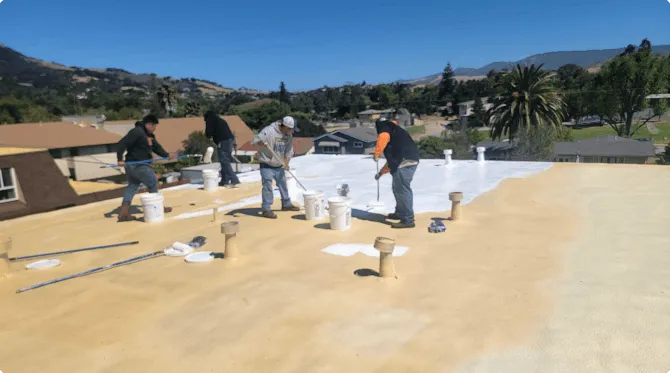
Liquid that expands, fills gaps, creates a seamless barrier, prevents air leaks, high thermal resistance. Open-cell: less dense, good insulation and soundproofing. Closed-cell: denser, superior moisture resistance and structural support.
- Open-cell: less dense, soundproofing
- Closed-cell: dense, moisture-resistant, structural
Fiberglass Insulation
(H4 in source.) Batts or rolls; affordable, easy to install, widely available. Less air sealing than spray foam; performs worse in moist environments.
Cost Analysis of Insulation Materials
Introduces installed-cost comparison; prices are estimates.
Initial Installation Costs
(H4 in source.) Spray foam $1.00-$4.00 per sq ft; fiberglass $0.40-$1.00 per sq ft; accurate as of writing. USA Spray Me is San Francisco-based serving Northern California.
| Insulation Type | Cost per Square Foot |
|---|---|
| Spray Foam Insulation | $1.00 - $4.00 |
| Fiberglass Insulation | $0.40 - $1.00 |
Long-Term Savings
Spray foam can reduce heating and cooling costs by up to 50%. Spray foam and rigid foam board last longer than fiberglass, which may need more frequent replacement or maintenance.
- Up to 50% lower heating/cooling costs
Pros and Cons of Each Insulation Type
Compares spray foam and fiberglass on performance, cost and installation, plus a material rating table.
| Insulation Type | Pros | Cons |
|---|---|---|
| Spray Foam | High R-value; excellent air sealing; adds structural integrity | Expensive; requires professional installation |
| Fiberglass | Cost-effective; easy to install; fire-resistant | Less effective air sealing; absorbs moisture; potential mold growth |
Special Considerations for Meat Processing Plants
Temperature control, moisture and mold, USDA compliance.
Temperature Control Needs
Polyurethane foam has an R-value up to 7.00 per inch; its seamless barrier gives an airtight seal preventing temperature fluctuations.
- Polyurethane foam up to R-7.00 per inch
Licensed, bonded & insured — free on-site inspections within 100 miles of San Francisco. Save $250 on orders over $2,500.
Moisture and Mold Resistance
Excess moisture causes mold, harming meat quality and health. Closed-cell spray foam and rigid foam board resist moisture, do not absorb water, reduce mold risk.
USDA Compliance
Links to USDA regulations; insulation must be non-toxic, easy to clean, resistant to mold and bacteria. Consult a contractor familiar with USDA requirements.
- Non-toxic
- Easy to clean
- Mold and bacteria resistant
Installation Considerations
Who should install and safety precautions.
DIY vs. Professional Installation
Skilled DIYers can install fiberglass; polyurethane foam requires professionals for efficiency, safety and standards compliance.
Health and Safety Precautions
Some materials release harmful fumes; ventilation and protective gear needed. Fiberglass can irritate skin and cause respiratory problems.
Choosing the Right Insulation for Your Plant
Selection criteria and implementation steps.
Factors to Consider
Initial cost, long-term savings, insulation efficiency (R-value and temperature maintenance), USDA/industry compliance, installation complexity and safety.
- Initial cost
- Long-term savings
- Insulation efficiency
- USDA compliance
- Installation complexity and safety
Steps to Implement
Assess needs, choose material, hire professionals for polyurethane foam, monitor performance regularly.
- Assess your needs
- Choose the material
- Hire professionals
- Monitor performance
Get an Instant Quote From a Licensed California Insulation Contractor
USA Spray Me (CSLB Lic# 1058008) installs spray foam, blow-in, fiberglass and soundproofing insulation, foam roofing and protective coatings throughout the San Francisco Bay Area and within 100 miles of the city, including San Francisco. Call (855) 566-5340 or request a free inspection below — save $250 on orders over $2,500.