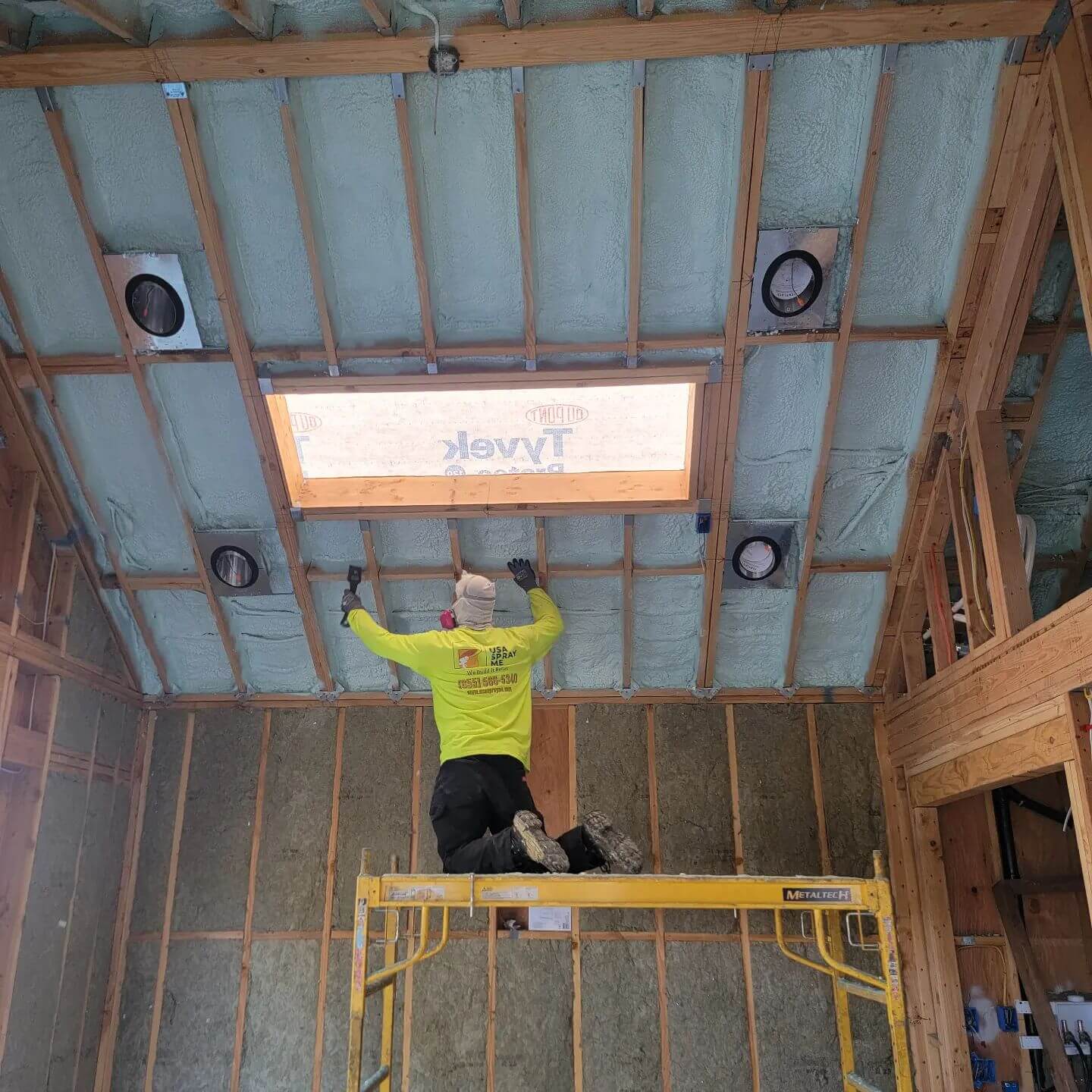
- Spray foam offers strong efficiency and moisture control for Santa Rosa's variable climate but costs more upfront.
- Blown-in is affordable and covers irregular spaces but may settle.
- Fiberglass is inexpensive and easy to install but not airtight.
- Rigid foam is durable and moisture-resistant with long-term savings.
- USA Spray Me combines spray and rigid foam for Santa Rosa research labs.
Finding the Right Insulation for Your Santa Rosa Lab
The U.S. Department of Energy attributes 20-30% of building energy loss to improper insulation and air leaks. Insulation affects efficiency, lab safety and functionality. Spray foam, closed-cell, fiberglass and blown-in differ in R-value and cost; best choice depends on lab needs and climate.
- DOE: 20-30% of energy loss from poor insulation and air leaks
Importance of Proper Insulation
Insulation regulates temperature, lowers energy use, protects sensitive equipment from environmental swings, and supports accurate experimental results.
Factors to Consider in Santa Rosa
Santa Rosa's climate calls for versatile insulation with thermal resistance and stable indoor conditions. Factors: humidity, temperature extremes, lab requirements, budget, installation logistics. Higher upfront costs may be offset by savings depending on how long the operation stays in the building.
- Humidity
- Temperature extremes
- Lab requirements
- Budget
- Installation logistics
How Insulation Affects Efficiency
Reduces heat transfer and HVAC load, lowering utility and operating costs. Stable temperatures prevent equipment malfunctions. Introduces USA Spray Me as San Francisco-based serving Northern California with polyurethane foam.
Types of Insulation Available
Comparison table with descriptions and price ranges; estimates at time of writing.
| Insulation Type | Description | Price Range (per sq ft) |
|---|---|---|
| Spray Foam Insulation | Exceptional thermal resistance and airtight seal; ideal for irregular shapes and hard-to-reach spaces; expands to fill gaps | $2.00 - $9.00 |
| Fiberglass Insulation | Cost-effective, easy to install, fine glass fibers, good thermal resistance, non-combustible | $1.40 - $3.00 |
| Blown-In Insulation | Covers hard-to-reach spaces; loose-fill conforms to space for a seamless barrier | $1.50 - $4.00 |
| Rigid Foam Panels | Durable, high-performance, excellent moisture resistance; panel/board form | $3.00 - $10.00 |
| Radiant Barrier Insulation | Reflects radiant heat, reducing AC needs; used alongside other types | $1.00 - $3.00 |
Pros and Cons of Each Option
Spray foam's thermal performance suits temperature-sensitive labs. Pros/cons listed for spray foam, blown-in and fiberglass only.
Spray Foam Insulation
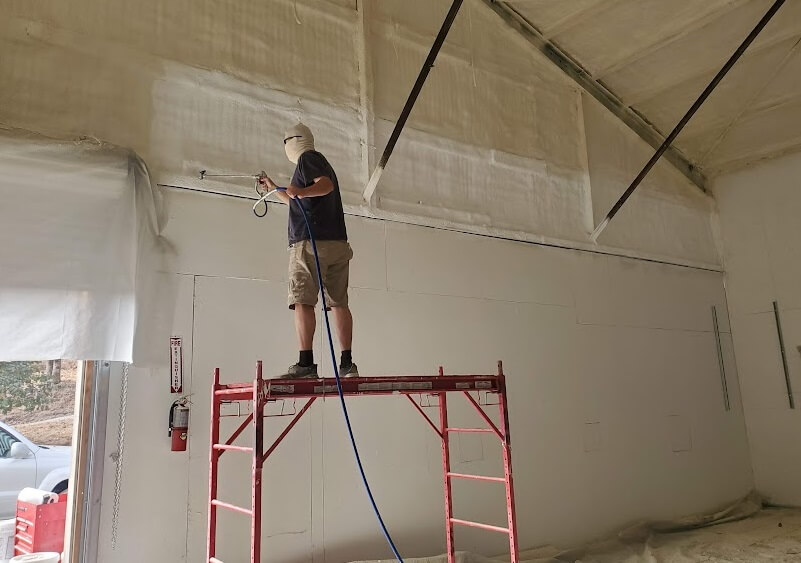
Pros: energy efficiency via airtight seal, moisture resistance preventing mold, long-lasting with no settling, adds structural strength to walls and roofs, fills cracks and voids. Cons: higher initial cost, professional installation, needs ventilation during curing, slight odor while curing, not DIY.
- Pros: airtight seal, moisture resistance, no settling, structural strength, fills voids
- Cons: higher cost, professional install, ventilation during curing, curing odor, not DIY
Licensed, bonded & insured — free on-site inspections within 100 miles of San Francisco. Save $250 on orders over $2,500.
Blown-In Insulation
Pros: cost-effective thermal protection, fills gaps and hard-to-reach areas, quick retrofit install, eco-friendly recycled options. Cons: settles over time, absorbs moisture (mold risk without barriers), not fully airtight, may need replenishment.
- Pros: affordable, fills gaps, quick retrofits, recycled content
- Cons: settles, absorbs moisture, not airtight, periodic top-up
Fiberglass Insulation
Pros: affordable and widely available, easy install in new or retrofit, naturally fire-resistant, batts or blown-in, moderate noise reduction. Cons: can absorb moisture and grow mold, not airtight, fibers irritate skin, less effective in extreme temperatures, needs protective gear.
- Pros: affordable, easy install, fire-resistant, batts or blown-in, moderate noise reduction
- Cons: moisture/mold risk, not airtight, skin irritation, weaker in extremes, protective gear
Best Applications for Each Insulation Type
Fiberglass for standard walls and ceilings where cost matters; spray foam for new construction or airtight needs; blown-in for retrofits and irregular spaces; reflective barriers for high solar exposure; rigid foam for moisture-prone areas.
- Fiberglass: standard walls/ceilings
- Spray foam: new construction, airtight seals
- Blown-in: retrofits, irregular spaces
- Reflective barriers: high solar exposure
- Rigid foam: moisture-prone areas
Lab Environments and Insulation Needs
Labs need stable conditions for accurate experiments and equipment protection; insulation limits temperature swings and helps control humidity. Santa Rosa's variable temperatures require insulation handling both heat and cold.
Weather Considerations in Santa Rosa
Mediterranean climate with warm, dry summers (average highs 82°F) and cool, non-freezing winters (average lows 38°F). Spray foam and rigid foam offer high R-values and moisture control suited to these swings.
- Average summer high 82°F
- Average winter low 38°F
Efficiency Enhancement for Labs
Whole-building approach: pair insulation with efficient lighting and HVAC plus regular maintenance and upgrades.
Get an Instant Quote From a Licensed California Insulation Contractor
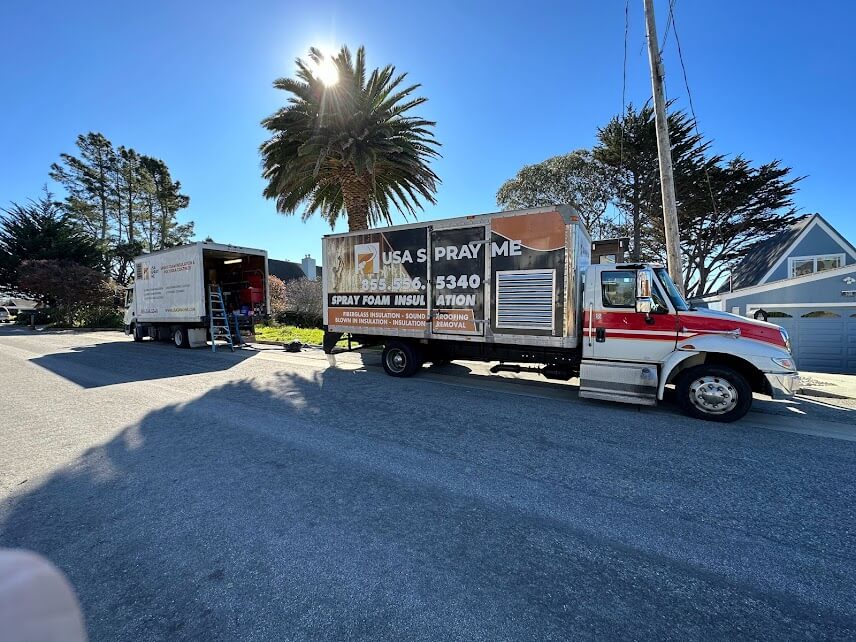
USA Spray Me (CSLB Lic# 1058008) installs spray foam, blow-in, fiberglass and soundproofing insulation, foam roofing and protective coatings throughout the San Francisco Bay Area and within 100 miles of the city, including Santa Rosa. Call (855) 566-5340 or request a free inspection below — save $250 on orders over $2,500.